
the woman in the well

It happened on a dark and stormy night. I wrote a short story in 5th grade that was based on that line and I won first place in a writing competition. But today, I’m not talking about a fictional story. This tragedy actually took place on the dark and stormy night of January 19, 1937, in Iredell County. This event was the subject of Episode 6 of the Crimes of the Carolinas podcast and I'm currently working with some other local history buffs on writing a book about this case.
A new bride of only a few months went missing overnight and the next day her body was discovered in the well on the property where she lived.
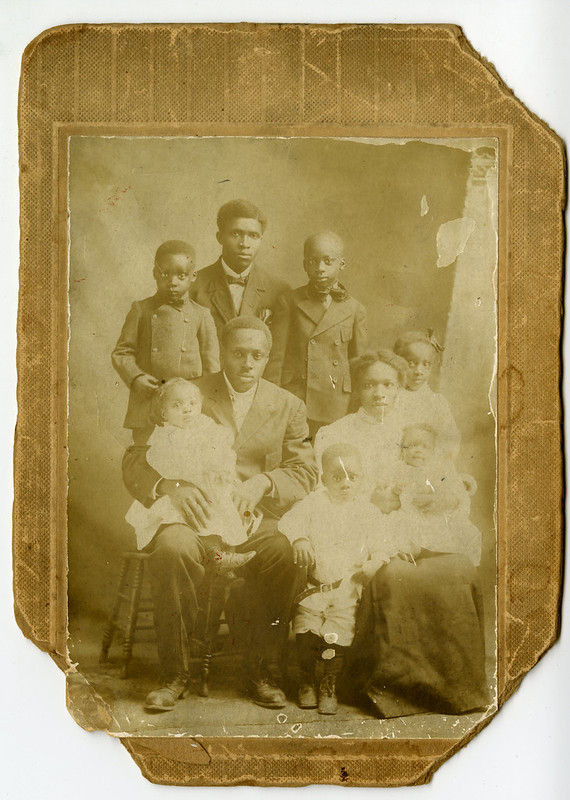
Lue Cree Overcash was born April 23, 1916, to James A. and Lena Martin Overcash. She met her childhood sweetheart, Ray Herman Westmoreland, in school (pictured below). They graduated together in 1933 from Troutman High School and were married on November 28, 1936. Herman worked for Cascade Mills in Mooresville and Lue Cree was a clerk at the Belk’s store in Statesville. They had wanted to save some money for a house of their own when Herman’s father, Robert Homer “Harlee” Westmoreland, requested that the young couple move in with him and Herman’s siblings. Harlee’s wife, Ada, died in 1933 just before the young couple graduated high school. She had a thyroid condition from which she suffered greatly until the end.

Although Herman and his brother Glenn worked in Mooresville, their other siblings, Clyde (17), Marie (15) and Rachel (10) still lived at home with their father. Ever the dutiful children, Herman and Lue Cree moved into the Westmoreland house.
The night of January 19, 1937 seemed normal to the Westmoreland family. Herman and Glenn were in Mooresville staying with family for their shift the next day at Cascade Mills. The weather was awful that night. Newspapers reported that roads were flooded out. The Westmoreland house was located off a dirt road that would have been nearly impassable that night by car. Lue Cree went to bed around 8-8:30pm. Her bedroom was on the second floor right above the room where Harlee and his son Clyde stayed in. It was common practice for multiple family members to share rooms at that time.
The next morning, Marie Westmoreland found it strange that Lue Cree was not in the kitchen preparing breakfast as she usually did. The young girl assumed her sister-in-law was having a lie-in and went about making breakfast herself. When she called for Lue Cree to come down to eat, there was no response.
Her room was discovered to be empty and the bed looked as though she had not slept in it. Her watch was on the table beside the bed. Harlee searched the property and went to the Overcash farm to see if Lue Cree was with her parents. Then he went to Mooresville to tell his son that his wife was missing and to bring him home.
Later that afternoon, a body was discovered in the well and the investigation began.

She was found headfirst in the well, with no water in her lungs, indicating she was already dead before entering the water. Her body showed bruising on the elbows and forearms, an abrasion on the right hip, and a straight cut behind her right ear. She was wearing her panties, bra, and blue silk pajamas. One foot still had a stocking and dress shoe; the other was bare. Her missing shoe was later found in the well, and the matching stocking was discovered in her bedroom. Rigor mortis indicated she had been dead 6–8 hours before being placed in the well.


Investigators also noted a broken shovel handle on the property which Harlee claimed had broken weeks earlier, and perfect female footprints outside the house with no tracks leading to or away from them.
During the first session of the coroner's inquest, Dr. McElwee described a “depressed fracture to [the] skull,” abrasions on the elbows, and a scratch on the hip. Deputies reported blood and hair on the walls of the well and that the water was “black and bloody.” Isadore Heaggans, the man who helped retrieve the body, testified that he saw her feet first.
Harlee testified that he last saw Lue Cree around 8–8:30 p.m. the night before. He described the morning search, the unlocked doors of the house, and the muddy appearance of the well water. He also mentioned the broken shovel handle, saying it had snapped before Christmas.
Marie’s testimony was marked by confusion and evasiveness. She repeatedly said she didn’t remember who went upstairs, what her father said, or how her brother Clyde reacted. Her statements about the household’s water supply were contradictory—she claimed water had been brought from an uncle’s house the day before, that she had filled the kettle the previous night, and that she didn’t see anyone wash that morning. She also confirmed that Clyde stayed home alone for several hours while the others went to the Overcash farm.
Clyde’s testimony also contained inconsistencies. He said he went to bed around 7 p.m. and was awake when his father came to bed at 8:30. He first claimed he did not draw water that morning, then later said he drew one bucket. Rachel, the youngest sibling, also struggled to recall basic details, repeatedly answering “I don’t remember.”
During the second session of the inquest, Harlee was recalled. He admitted he had suggested checking the well and confirmed that a Black laborer named Leno Westmoreland worked for him. Herman testified about his movements the night of the murder, explaining that he had eaten dinner around 6–6:30 p.m., then accompanied his cousin William and William’s sister to a neighbor’s home before returning to bed around 8:30.
The most damning information comes from the February 1940 issue of Startling Detective magazine in which Detective Walden Snell records the testimony of Lue Cree's mother, Lena Martin Overcash (pictures left with husband, James A. Overcash). The 8-page article is full of details that weren't mentioned in the newspapers, but were critical to the investigation. Not only did Lena go out of her way to report the details of her daughter's murder to a magazine, she even incorporated the event into her husband's obituary in 1940. James A. Overcash had been ill for quite some time. The second paragraph of his obituary mentions how he was buried on the third anniversary of his daughter's death in 1937 at the home of her father-in-law, Harlee Westmoreland. To mention him by name in her husband's obituary is quite a statement from Lena Overcash.

She clearly has some feelings about her daughter's case and how it relates to the Westmoreland family.
Harlee's parents, George Washington and Mary Elizabeth Gardner Westmoreland, had eleven sons, several of whom had criminal records ranging from assault to fraud to adultery. One son, William Young Westmoreland, was executed in 1921 for murdering a taxi driver and disposing of the body in a well—an unsettling parallel to Lue Cree’s fate. William shot the taxi driver, Jim Nantz for no reason, according to the eyewitness who testified at the trial.
This raises the lingering question of why did no one publicly connect Harlee Westmoreland, the father-in-law of the murdered woman, to a family already known for violent crime, including a brother who had killed a man and dumped him in a well? In a small town, everyone talks. There is only sixteen years between 1921 and 1937, so surely the neighbors would remember the William Westmoreland case.
Another interesting feature of this case is that almost 80 years after the murder, a mysterious poem was found by a Westmoreland family member. The poem seemed to be written around the time of the murder and implicated that there might have been some back door politics that resulted in the case going unsolved. The sheriff who investigated, John White Moore, is even mentioned in the poem by name. Was there some kind of ongoing conspiracy to cover up the case? Or to not charge someone who might have been guilty?

This case has permeated the Amity Hill/Wither's Creek section of Iredell County for almost 90 years. The tragic outcome of this crime was that a young woman lost her life and two families were shattered. We might not ever know for sure who killed Lue Cree Overcash Westmoreland, but theories abound. Who do you think is responsible for her death?
This case has baffled generations and I am looking forward to diving in more as we research content for the book. More than just my macabre curiosity, I want to find justice for Lue Cree and her family. Sadly, Lue Cree is buried at Bethesda Presbyterian Church with her family. Her husband, Herman, remarried and had a family, but his obituary never mentions his first wife. I don't want her to fade from the memories of this community.
A Voice from the Grave
Rise up good people in your might
Ask your sheriff, by what right
He seeks to run again?
Was foully murdered, thrown in a well to die?
DID I DIE IN VAIN?
Oh Knights of Pythias and Lions Bold,
Oh worthy Masons and Kiwanians too,
From my tomb, I appeal to you.
On your county is a stain
Because it seems-
I DIED IN VAIN?
I wonder why no arrest was made,
Was your good sheriff so afraid?
Is his back bone of the hue?
Applied to jealousy and cowardice too?
Oh men, hang not your heads in shame,
Rise up, make your county worth its name.
That you may speak of it with pride,
Vow in its lines, no criminals shall hide.
I cannot rest, tho’ in my grave,
While in your midst there hides a Knave
A waiting perhaps to bad to slaughter,
Someone else’s only daughter.
Tho’ I’m dead, my spirit soars,
It sees the mockery of your laws;
It hears that Moore will run again,
It waits to hear you say,
SHE DID NOT DIE IN VAIN?
“LEST WE FORGET”


Comments